


Multi-club ownership has changed football significantly in recent years and is continuing to expand as a result of ongoing commercialisation and investor structures. Clubs now not only compete against each other, but also (necessarily) work together due to shared ownership structures. This article aims to define multi-club ownership and explore its various backgrounds. Multi-club ownership describes the multiple ownership of football clubs by a person or organisation. This ownership can consist of a majority stake (more than 50% of the shares in the respective club) or a minority stake (less than 50% of the shares in the respective club). An owner can also combine both types of ownership. For example, they may have a majority stake in club A and only a minority stake in club B. There are countless examples of multi-club ownership in football. One example of majority ownership is the City Group, which owns various clubs, led by Manchester City. The 777 Group (now in insolvency proceedings) is an example of minority shareholdings and has stakes in FC Sevilla and Hertha BSC Berlin, among others. The different backgrounds for multi-club ownership are described in the next paragraph (all specific analyses of multi-club ownership can be found here).
Diverse strategic motives behind Multi‑club ownership models
Regardless of whether it is a majority or minority stake, the reasons why owners invest in several clubs are diverse. In most cases, however, clubs with a majority stake serve the purpose of supporting a club that is at the top. This means, for example, that player development or, more recently, coach development (such as Liam Rosenior, who recently moved from RC Strasbourg to Chelsea FC within the Blue Group) is placed in the hands of a smaller club within the structure. The advantage of this is that, for example, young players can be shown a clear path when moving to an MCO. The disadvantages are well known and are particularly evident at Chelsea FC. Young players change clubs almost every year and, if they fail to develop, are moved to the so-called loan army, where they are sold to other clubs on an annual basis. Players are seen as a kind of speculative investment in the hope that their value will increase through a higher sale price. In this case, multi-club ownership is established in order to have players trained by sister clubs and then transfer them to the club at the top of the food chain. One example of this is the Red Bull Group, which even has a Head of Football in Jürgen Klopp, who acts as the head of the entire structure. At RB, RB Salzburg acts as a training ground for RB Leipzig.
Another of the most common reasons is investment purposes. This usually occurs in multi-club ownership structures with a minority stake. Investors usually do not want to invest exclusively in one club (as in the free economy). The capital should be spread across several clubs. An investor then buys shares in various clubs (usually only minority stakes), creating multi-club ownership. The investor then plans to sell these shares at a profit after they have increased in value.
Key differences between Multi‑club ownership and traditional club partnerships
An alternative to multi-club ownership is club cooperation, which has long been common practice, particularly in youth football. In youth football, professional clubs often cooperate with smaller clubs in the region. This has the advantage for professional clubs that youth players do not have to be scouted at the various amateur clubs in the region before moving to the youth academy. The amateur clubs receive compensation for this, which makes it easier to finance the entire game operation and increases the quality of the youth players in their teams. These cooperations also exist between professional clubs, but are much less common. For example, FC Bayern Munich has had a cooperation with the former German third division club SpVgg Unterhaching since 2024. According to the official press release, the aim is to establish long-term cooperation in the areas of talent promotion and scouting, which does not only refer to the cooperation in the youth sector described above. FC Bayern can, for example, loan talented players to the third division (in the Munich area, so that the players do not have to move) in order to develop them further there. The advantage for Unterhaching is that they get good players who are expected to bring sporting success during their loan spell. The fundamental difference is that multi-club ownership requires a stake in several clubs, whereas club cooperation involves collaboration but separate ownership structures.
FC Bayern Munich also provides an example of an interesting mix of multi-club ownership and cooperation. It cooperates with LAFC from Los Angeles. The primary aim of the cooperation is to promote international talent and make talent from North America more accessible to FC Bayern. The cooperation was also turned into a joint venture called Red&Gold Football. Red&Gold cooperates with various international clubs such as S. D. Aucas, which has been a cooperation partner since December 2025 and aims to enable talents from Ecuador to make the leap into a top European league with an intermediate step in the MLS. Other partners include Jeju SJ FC (South Korea), Gambino Stars Africa (an academy for African talent in Senegal) and Racing Club de Montevideo. The latter was taken over by Red&Gold Football as the majority shareholder of the corporation in December 2023. The cooperation between FC Bayern and LAFC thus creates a kind of multi-club ownership.
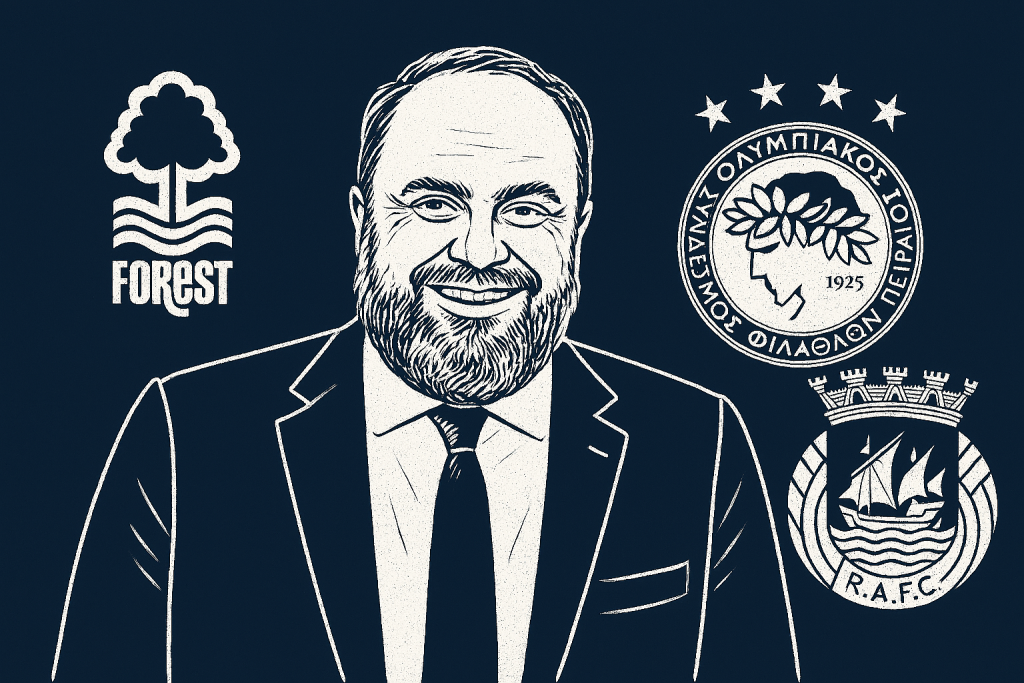
Pingback: Marinakis’ Multi‑Club Empire: Olympiacos, Forest & Rio Ave